If you’ve ever stood in the fragrance aisle checking an ingredients list for the word “alcohol,” you’re not alone. It’s one of the most common questions UK Muslim women ask before buying an oud perfume — and most of what comes up when you search for an answer is either a religious lecture with no practical takeaway, or a product page that just tells you what you want to hear.
This guide does neither. It covers what oud actually is, why alcohol became part of the conversation at all, where oil-based attar fits in, and what that means in practice — including for the eau de parfum blends in our own Emiri Oud collection.
The short answer: is oud perfume halal?
Oud itself isn’t in question. The resin-infused wood, the distilled oil, the scent — none of it carries any prohibition in Islamic scholarship, and wearing a pleasant fragrance is widely regarded as encouraged, not just permitted. What actually gets debated is the carrier a perfume is built on: oil, in the case of traditional attar, or alcohol, in the case of most modern eau de parfum sprays — including the majority of oud fragrances sold in the UK today.
Why alcohol shows up in this conversation at all
The alcohol that’s explicitly prohibited in Islamic sources is khamr — wine and other intoxicating drinks, meant to be consumed. The alcohol used in perfume is a different substance doing a different job: it’s a cosmetic-grade solvent (commonly labelled “alcohol denat.” or ethanol) that carries the fragrance oils onto skin or fabric and then evaporates. It isn’t derived from grapes or dates in the vast majority of commercial perfumes, and it was never intended to be drunk.
That distinction is why most contemporary scholars treat perfume alcohol as permissible for external use — it doesn’t meet the definition of khamr, and intent and function matter in how it’s classified. It’s also why you’ll find genuine, respected disagreement on this: some scholars and individuals prefer caution regardless, following the principle of leaving what causes doubt for what doesn’t. Both positions are held in good faith, and which one you follow is a personal choice within your own understanding — not something this guide is trying to settle for you.
Attar vs. spray oud — what the difference actually is
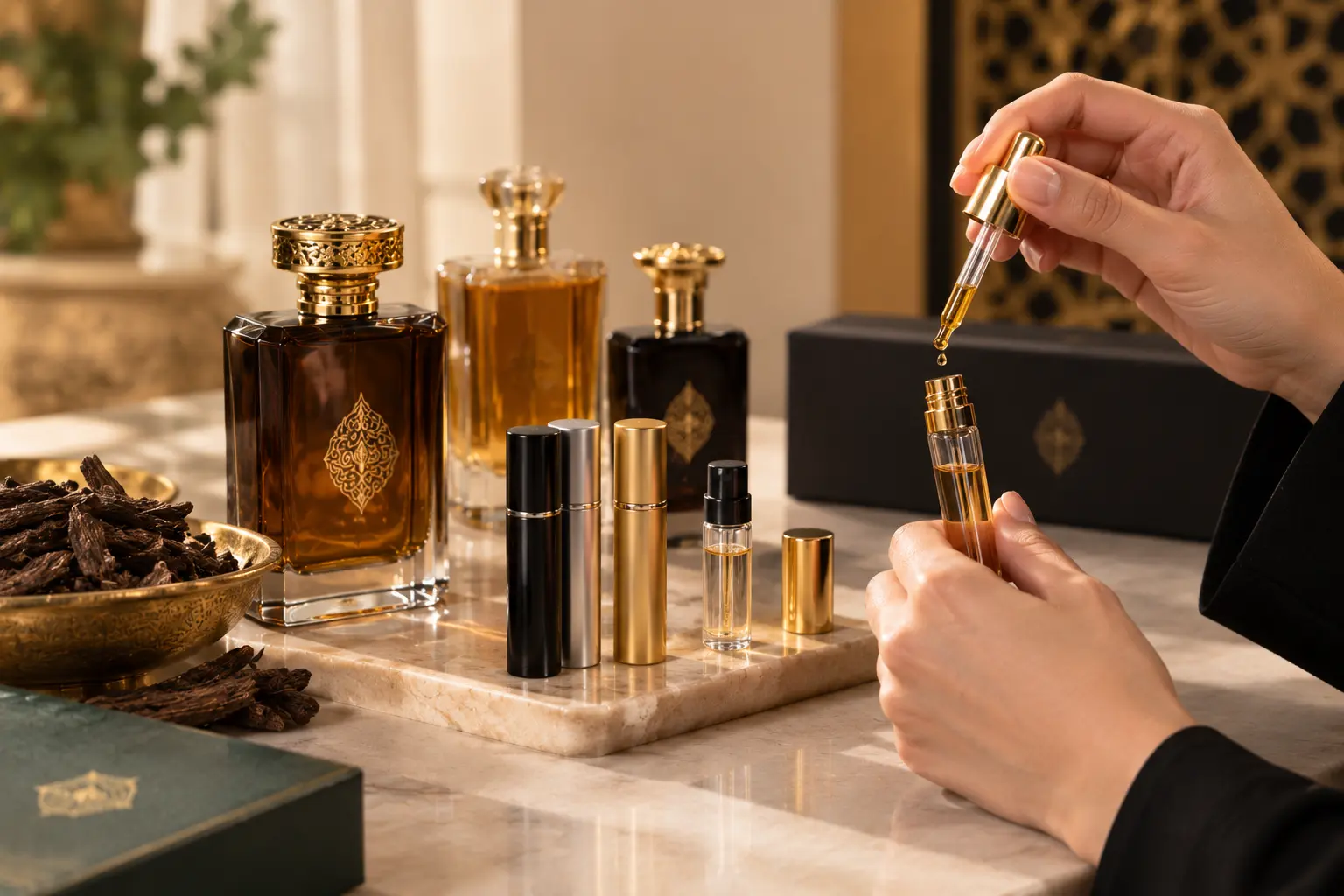
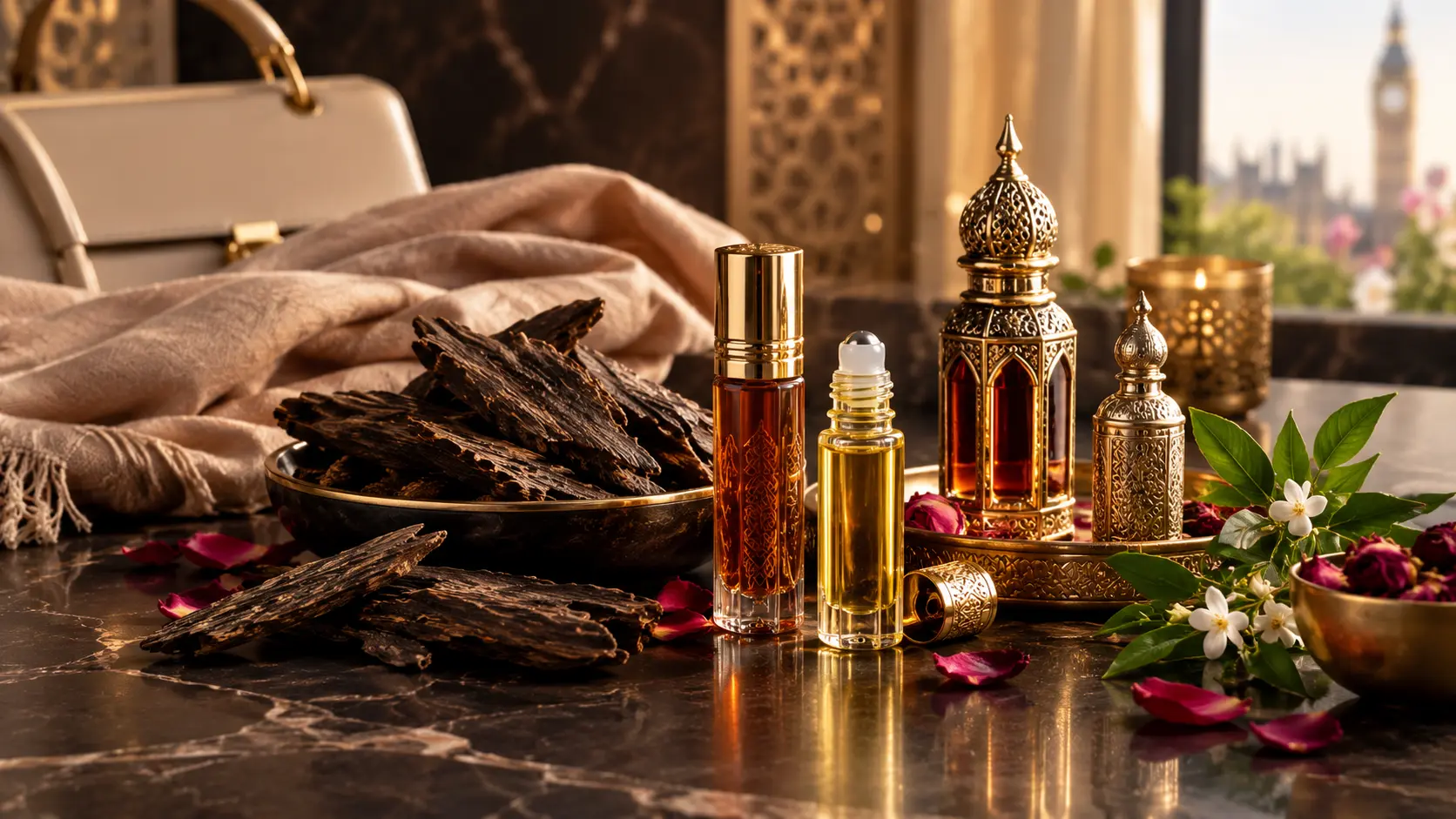
Attar is the older format: pure oud oil, or oud blended into a neutral oil base like sandalwood or jojoba, worn directly on skin with no alcohol involved at all. It sits closer to the skin, runs warmer, and tends to last in a different way — less initial projection, more longevity in the base notes.
Spray oud — an eau de parfum — uses an alcohol carrier to spread the fragrance oils more evenly and project further on first application, which is why it’s become the more common format for everyday wear across the UK. Neither format is “more halal” than the other in the mainstream scholarly view; they’re simply built differently, and attar is the version that removes the alcohol question entirely for anyone who’d rather not think about it at all.
Does wearing perfume affect wudu or prayer?
No — and this trips people up more than it should. Wudu is invalidated by specific things: using the toilet, passing wind, deep sleep, and a handful of other defined acts. Fragrance on your skin or clothes isn’t one of them, regardless of whether it’s oil-based or alcohol-based.
There is a separate, and genuinely useful, point specifically for women: hadith literature discourages women from wearing perfume strong enough for men outside their home to notice when they go out in public, as a matter of modesty rather than a ruling on the fragrance itself. That guidance is about how and where a scent is worn — at home, for your husband, or among other women, wearing oud freely is a different matter entirely, and one that’s widely encouraged rather than restricted.
How to check what you’re actually buying
If the format matters to you, the label will tell you — you don’t need to guess:
- Attar, oil, oil-based, roll-on, or alcohol-free: no alcohol carrier.
- Eau de Parfum (EDP), Eau de Toilette (EDT), spray, or an ingredients list showing alcohol denat. / ethanol / SD alcohol: an alcohol-based carrier is present.
Neither label is a red flag on its own — it’s simply information, and which one you choose comes down to your own comfort and understanding, not a fixed rule the format itself breaks.
Where Emiri Oud fits into this
We’ll be straightforward: our oud fragrances — including Hilwa, Rosmah, Eden’s Avaris, Dukhan, Sakina, and Zafira — are eau de parfum blends, built on a cosmetic alcohol base, not oil attars. We’d rather tell you that plainly than let you assume otherwise and feel misled later.
What that means, based on everything above: the alcohol in these blends is the cosmetic kind, not khamr, and mainstream scholarly opinion treats it as permissible to wear. If that aligns with your own understanding, our collection is built around oud that performs well through a UK day — opening with the resinous depth oud is known for and settling into something wearable for hours, not the heavy, overpowering version people sometimes associate with “strong oud.” If you’d rather keep to an alcohol-free format as a matter of personal preference or caution, that’s a completely reasonable choice too — look specifically for attar or oil labelling when you shop, wherever you buy from.
Ready to find your blend? Shop the full collection, or read our local guide to the best oud perfumes in the UK if you’re still comparing options.
Frequently asked questions
Can Muslims wear oud?
Yes. Oud itself — the wood, the resin, the distilled oil — carries no prohibition in Islamic scholarship, and wearing a pleasant fragrance is widely regarded as encouraged rather than simply permitted.
Is there alcohol in oud perfumes?
Many spray oud perfumes sold as eau de parfum, including the full Emiri Oud collection, use a cosmetic alcohol base to carry the fragrance and help it project. This is a different substance from the alcohol in drinks (khamr) and is treated as permissible for external use by most contemporary scholars. Pure oil-based attar is the alcohol-free alternative for anyone who prefers to avoid alcohol entirely.
Which perfume is halal in Islam?
Pure oud oil and other oil-based attars are halal without dispute. For alcohol-based eau de parfum, most contemporary scholars accept cosmetic-grade alcohol as permissible since it isn’t intoxicating and isn’t derived from wine, though some individuals choose caution and stick to alcohol-free formats — both are reasonable positions.
What is oud perfume made of?
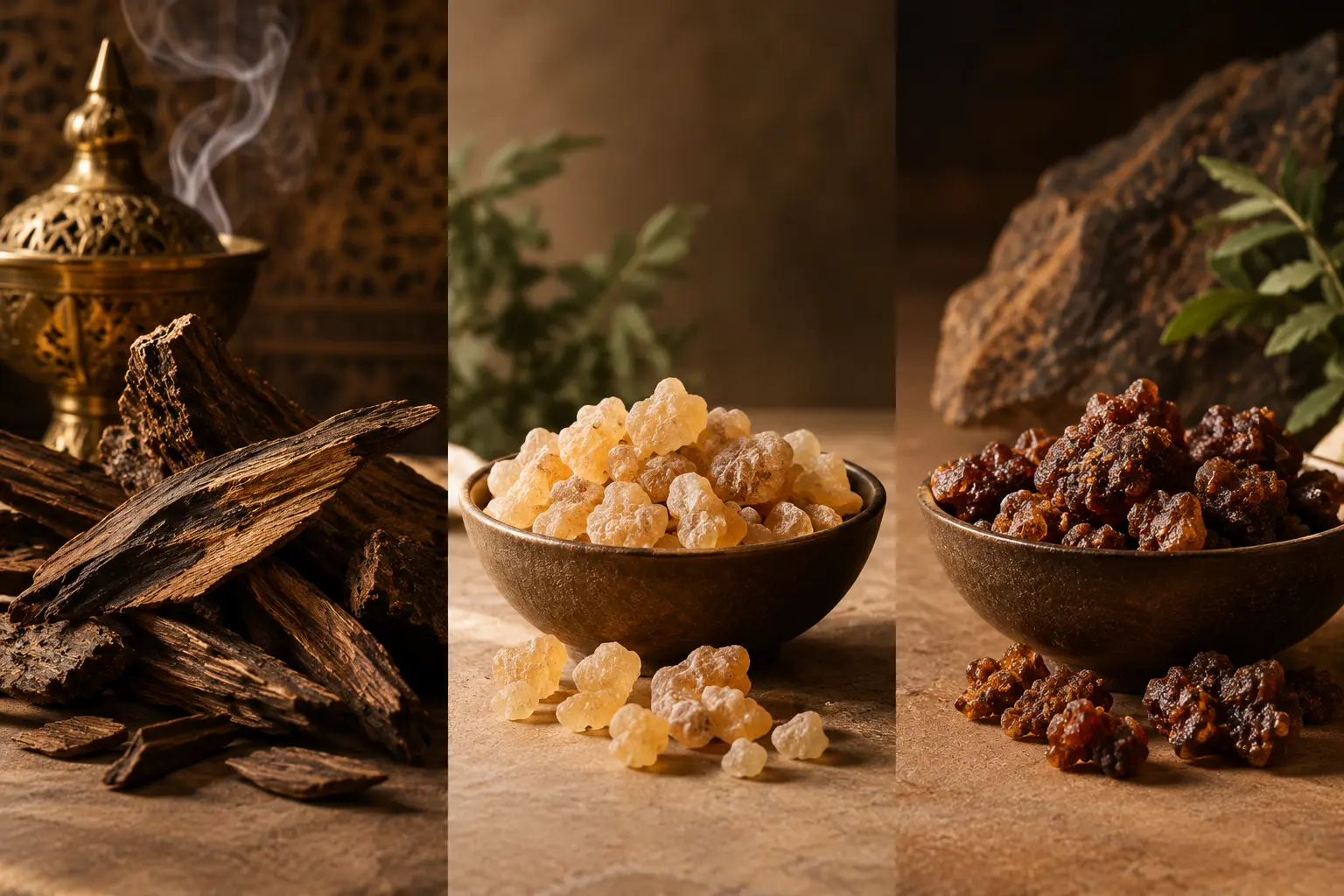
Oud comes from the resin-infused heartwood of the Aquilaria tree. It’s either distilled into a pure oil and worn as attar, or blended into an alcohol-based eau de parfum for a lighter application with further initial projection.
Is Emiri Oud alcohol-free?
No — our fragrances, including Hilwa, Rosmah, Eden’s Avaris, Dukhan, Sakina, and Zafira, are eau de parfum blends built on a cosmetic alcohol base, not oil attars. Per mainstream scholarly opinion, this type of alcohol is not the same as the alcohol prohibited in Islam, so it’s considered permissible to wear. If you prefer a fully alcohol-free format as a matter of personal caution, look specifically for attar or oil-based labelling when you shop. Oud has been part of how this community presents itself, welcomes guests, and marks meaningful moments for centuries — see our piece on the timeless allure of oud for where that history comes from, and why the fragrance is gaining renewed popularity across the UK today. For more on what’s shifting in the category, our roundup of the latest oud perfume trends in the UK is worth a read too.