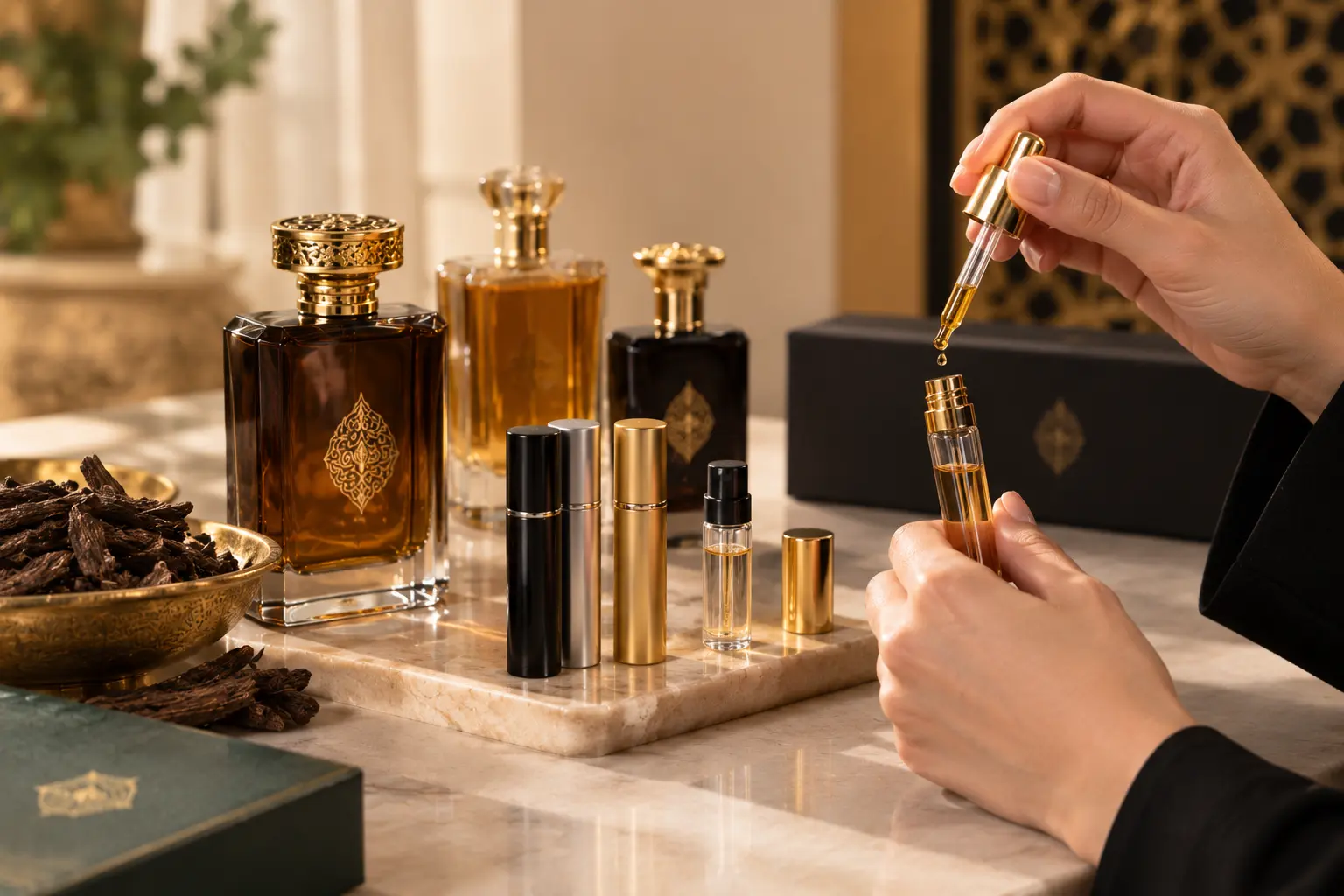
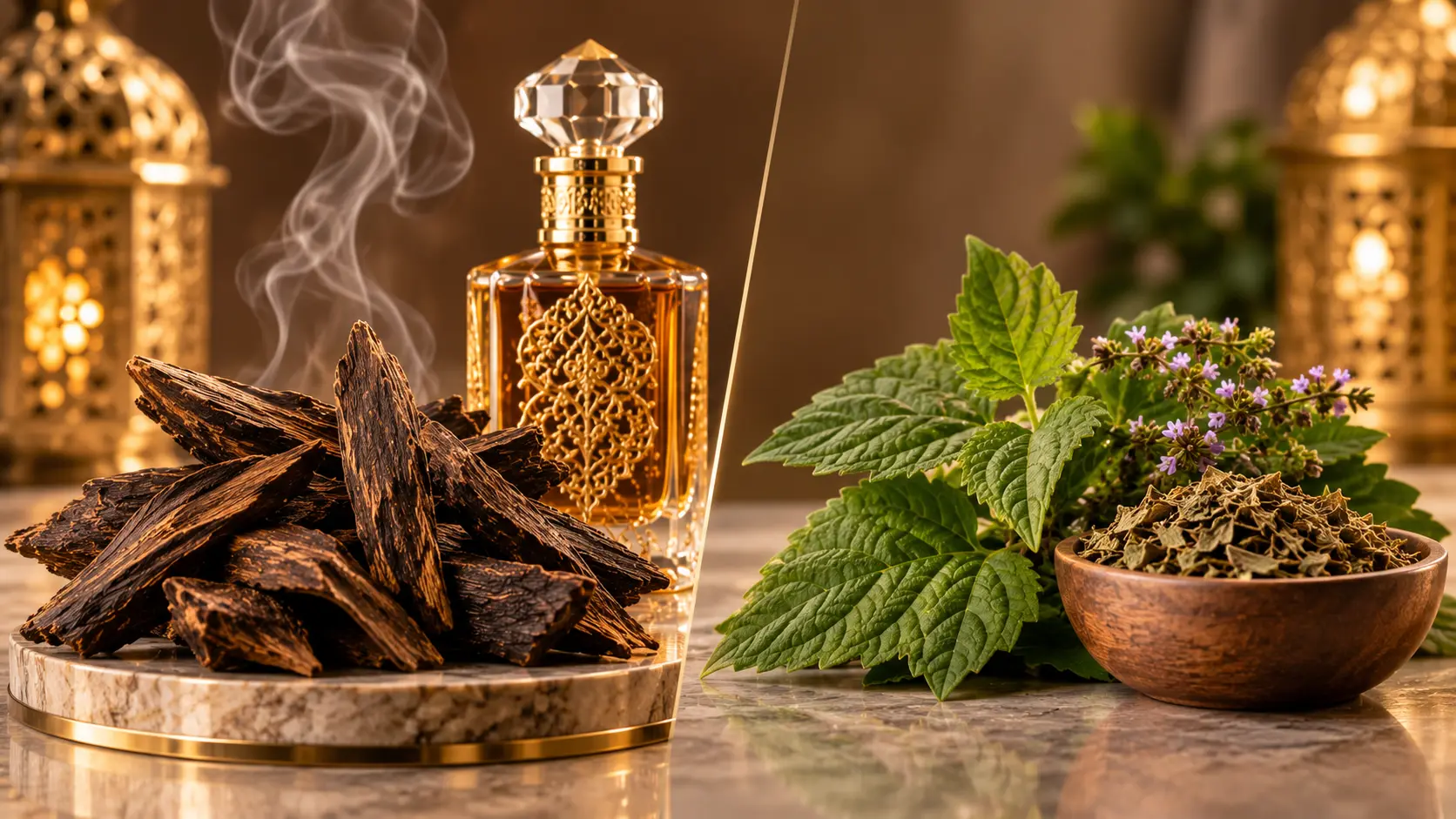
| Oud and patchouli are both deep, woody base notes, but they come from very different sources. Oud, also called agarwood, is a dark resin that forms inside Aquilaria trees. It develops after a tree is wounded and infected by a mould. Patchouli is an oil distilled from the dried leaves of a plant in the mint family. Oud smells smoky, resinous and sometimes leathery or animalic. Patchouli smells earthy, sweet and slightly damp, like forest soil. Real oud is rare and costly, while patchouli is widely grown and far more affordable. |
Oud and patchouli often turn up side by side on perfume notes lists. Both are dark, rich and long-lasting. Both sit at the base of a fragrance. So it’s easy to mix them up.
But they are very different materials, with different origins, scents and price tags. Here’s how to tell them apart, and why perfumers so often pair them.
What Is Oud?
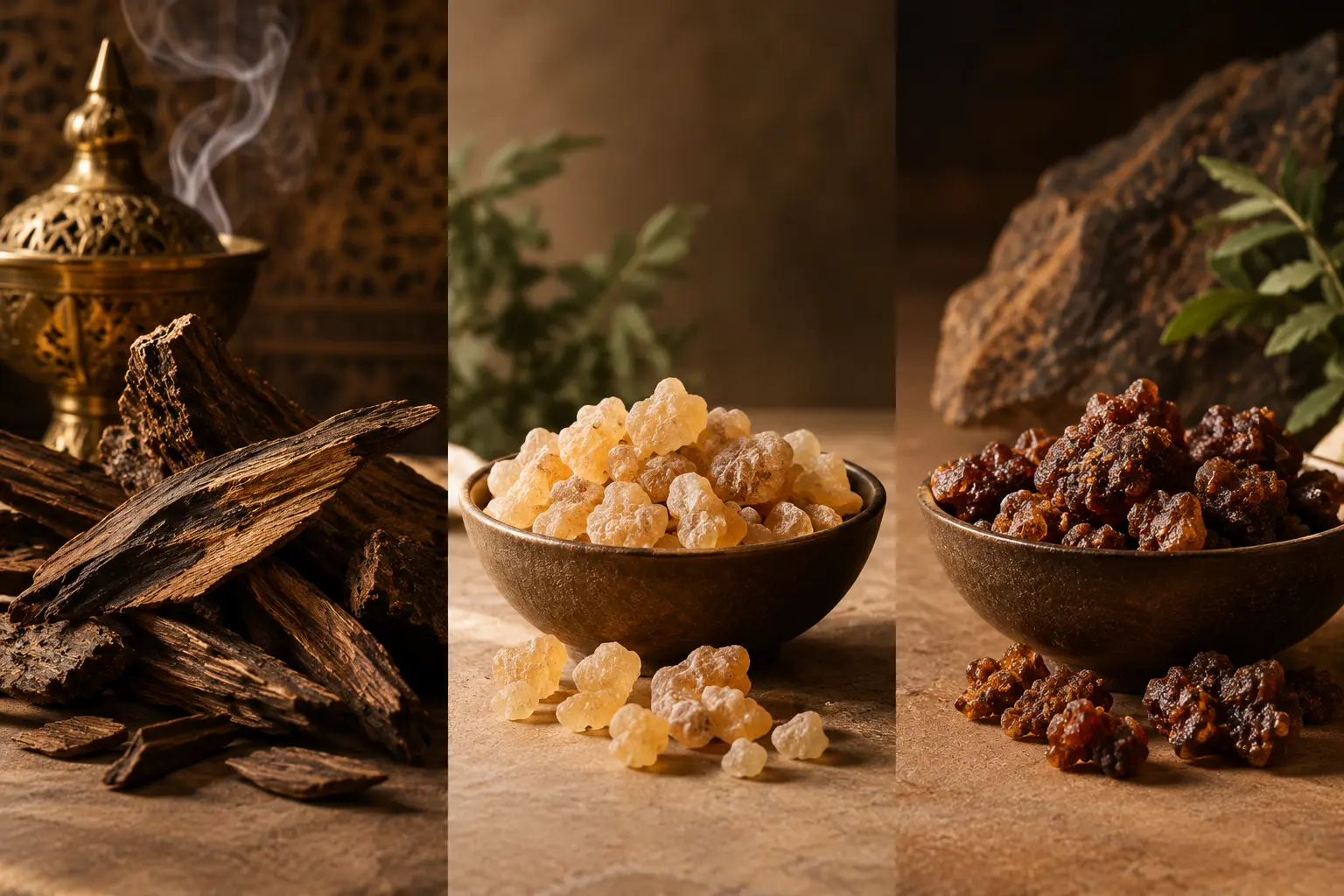
Oud comes from Aquilaria trees, which grow across South and Southeast Asia. A healthy tree has pale, almost scentless wood. When a tree is wounded, often by insects, a mould can infect it. The tree fights back by filling its heartwood with a dark, fragrant resin.
That resin-soaked wood is agarwood, known in Arabic as oud. It can be burned as incense, distilled into oil or used in perfume.
Only a small share of wild trees ever form this resin. That’s one reason real oud is so rare and so highly valued. Aquilaria trees are also protected under CITES, the international treaty on trade in endangered species. Today, much of the supply comes from cultivated trees.
What Is Patchouli?
Patchouli is a leafy, bushy plant from the mint family. Its scientific name is Pogostemon cablin. It’s native to tropical parts of Asia and is grown widely, with Indonesia producing most of the world’s patchouli oil.
To make the oil, the leaves are dried and then steam distilled. Drying or light fermenting helps release the scented oil from the leaves.
Patchouli has been used in perfume for centuries. It became famous in the West in the 1960s and 1970s, when it was linked with the hippie movement. Today it’s one of the most used base notes in modern perfumery.
How Do They Smell?
The Scent of Oud
Oud is complex and changes a lot on the skin. Depending on its source and quality, it can smell:
- Smoky and woody
- Resinous and balsamic
- Leathery or animalic
- Sweet, with hints of fruit or honey in some oils
Some people find raw oud strong or even challenging at first. As it settles, it often turns smoother, warmer and richer.
The Scent of Patchouli
Patchouli is earthy and grounding. It’s often described as:
- Earthy, like damp soil or a forest floor
- Sweet and slightly spicy
- Woody and balsamic
- Dark and a little herbal
Patchouli smells more familiar to most people than oud. You’ll find it in many popular perfumes, as well as candles and incense.
Oud vs Patchouli at a Glance
| Feature | Oud | Patchouli |
| Source | Resin inside infected Aquilaria trees | Dried leaves of a mint-family plant |
| How it’s made | Distilled from resinous wood, or burned as wood chips | Steam distilled from dried leaves |
| Main regions | South and Southeast Asia | Indonesia and other tropical areas |
| Scent | Smoky, resinous, leathery, animalic | Earthy, sweet, woody, slightly damp |
| Rarity | Rare; trees are protected under CITES | Widely grown |
| Price | Among the most costly perfume materials | Affordable |
| Role in perfume | Rich base note and centrepiece | Base note and fixative |
Why Oud Costs So Much More
The difference in price comes down to how each material is made.
- Oud depends on a slow natural process. A tree has to be wounded and infected, then build up resin over many years.
- Few trees produce it. In the wild, only a small share of trees form resin at all.
- Supply is limited. Trade is controlled, and cultivated trees take years to produce good resin.
- Patchouli grows quickly. It’s a farmed crop that can be harvested and distilled at scale.
Because real oud is so costly, many perfumes use an oud accord instead. This is a blend of other materials designed to recreate the oud effect. It’s a normal part of perfumery and not a sign of a poor fragrance. It does mean that “oud” on a notes list can smell different from one perfume to the next.
Why Perfumers Pair Oud and Patchouli
Oud and patchouli work well together, which is why you’ll often see both on the same notes list.
- They share a dark, woody character. Each one supports the other without clashing.
- Patchouli adds earthiness. It can soften oud’s smoky edge and add a sweet, grounded warmth.
- Both last a long time. As base notes, they help a fragrance linger on skin and clothes.
- They suit rose and amber. Oud and rose is a classic pairing, and patchouli often sits alongside them.
In some fragrances, patchouli also helps stretch or round out the oud effect. That’s one reason the two notes can be hard to tell apart in a finished perfume.
How to Tell Them Apart in a Perfume
If you’re testing a fragrance and want to know which note you’re smelling, try this:
- Wait for the dry-down. Both are base notes, so they show up most clearly after 30 minutes or more.
- Look for smoke. A smoky, incense-like or leathery edge points to oud.
- Look for soil. A damp, earthy, slightly sweet smell points to patchouli.
- Notice the depth. Oud often feels more layered and changes more over time.
- Check the notes list. It won’t tell you everything, but it shows what the perfumer intended.
For the best comparison, test fragrances on skin rather than paper, and give each one a full day.
Which Should You Choose?
There’s no right answer. It depends on the mood you want.
You may prefer oud if you like:
- Rich, smoky and luxurious scents
- Fragrances with a strong presence and long wear
- Traditional Middle Eastern perfume styles
You may prefer patchouli if you like:
- Earthy, natural and grounding scents
- A familiar, easy-to-wear base
- Bohemian or modern woody fragrances
Can’t decide? A fragrance that blends both gives you the depth of oud with the warmth of patchouli.
Discover Oud at Emiri Oud
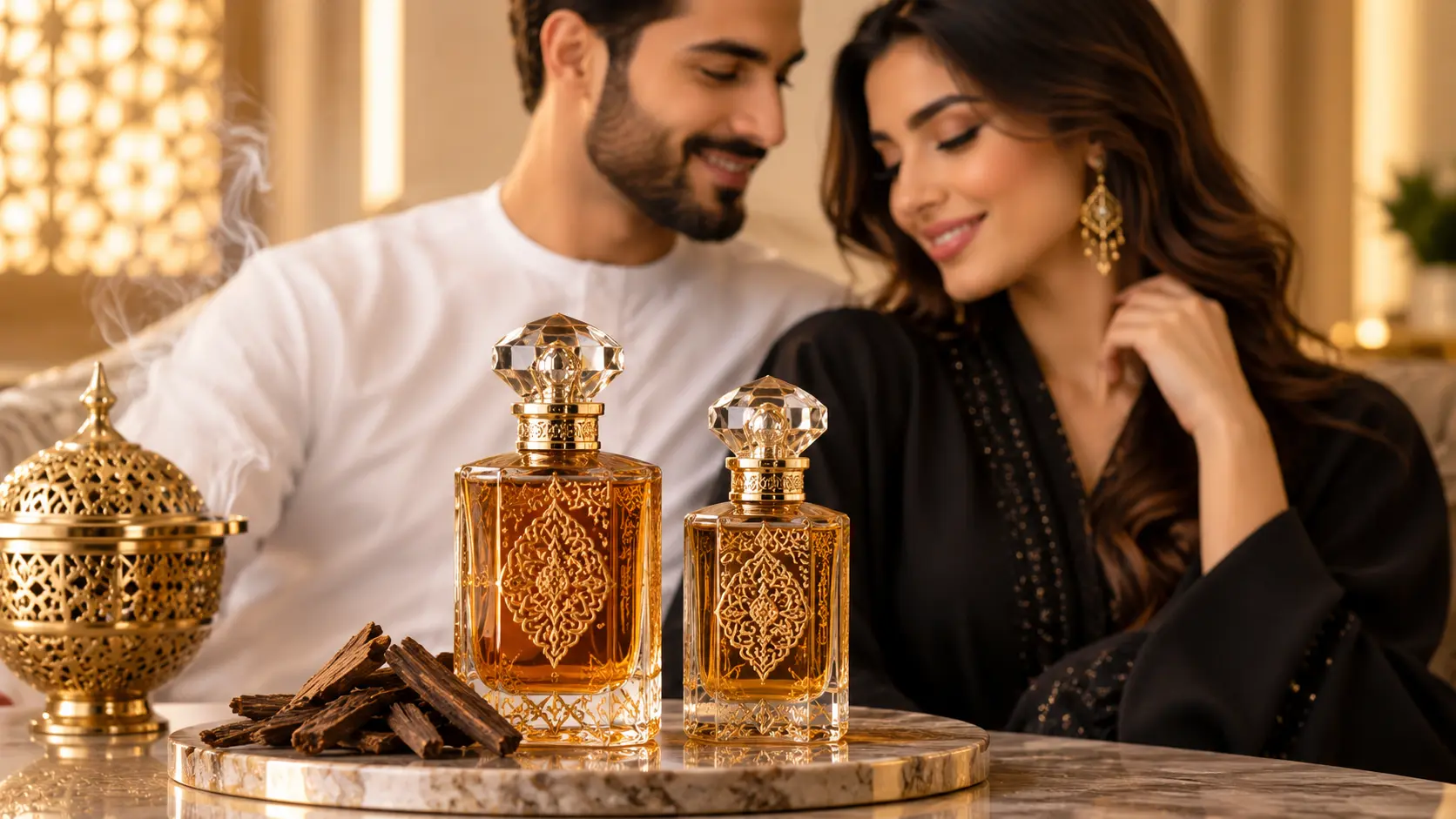
The best way to understand oud is to wear it. Explore the Sheikh collection of men’s oud perfumes or the Sheikha collection for women, and find the depth that suits you.
Not sure which fragrance to try first? Contact the Emiri Oud team and we’ll help you choose.
Frequently Asked Questions
What is the difference between oud and patchouli?
Oud is a resin that forms inside Aquilaria trees after they are wounded and infected by a mould. Patchouli is an oil steam distilled from the dried leaves of a mint-family plant. Oud smells smoky and resinous, while patchouli smells earthy and sweet.
Does patchouli smell like oud?
Not really, though both are dark, woody base notes. Oud is smoky, resinous and sometimes leathery. Patchouli is earthier and sweeter, with a damp, soil-like character.
Why is oud more expensive than patchouli?
Real oud forms slowly, and only a small share of trees produce it. Aquilaria trees are also protected under CITES. Patchouli is a farmed crop that can be grown and distilled at scale.
Is patchouli used in oud perfumes?
Often, yes. Patchouli pairs well with oud, adding earthy warmth and helping the fragrance last. The two are commonly found together on notes lists, often with rose or amber.
Where does patchouli come from?
Patchouli is native to tropical Asia. Indonesia produces most of the world’s patchouli oil, and the plant is also grown in other tropical regions.
Which lasts longer, oud or patchouli?
Both are long-lasting base notes. How long a perfume lasts depends on its overall blend, its strength and your skin. One note alone doesn’t decide it.