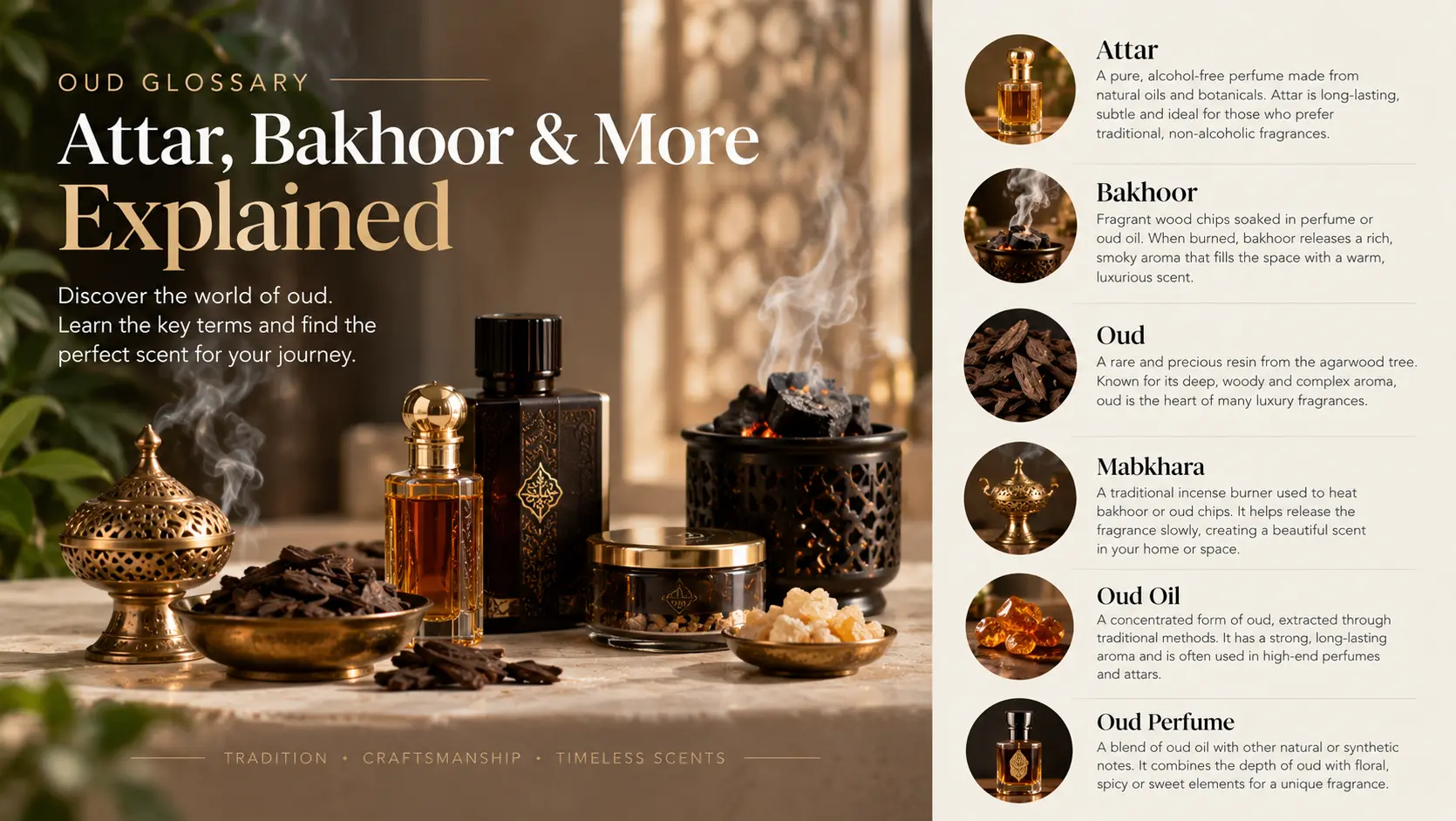
| Oud is the fragrant resin from agarwood. Dehn al oud is pure oud oil. Attar is a traditional, alcohol-free perfume oil, and a mukhallat is a blend of perfume oils, often built around oud. Bakhoor is scented wood chips or small bricks, burned to perfume a home or clothes. It’s usually burned in a mabkhara. Modern oud perfumes, such as eau de parfums, use alcohol instead of oil and are sprayed rather than dabbed. |
Step into the world of oud and you’ll quickly meet unfamiliar words. Attar, dehn al oud, mukhallat, bakhoor, tola. They appear on bottles, in shop descriptions and in conversations between fragrance lovers.
Knowing what they mean makes buying, wearing and gifting oud much easier. This glossary explains the most common terms in plain English, grouped so you can find what you need quickly.
The Raw Material
Oud
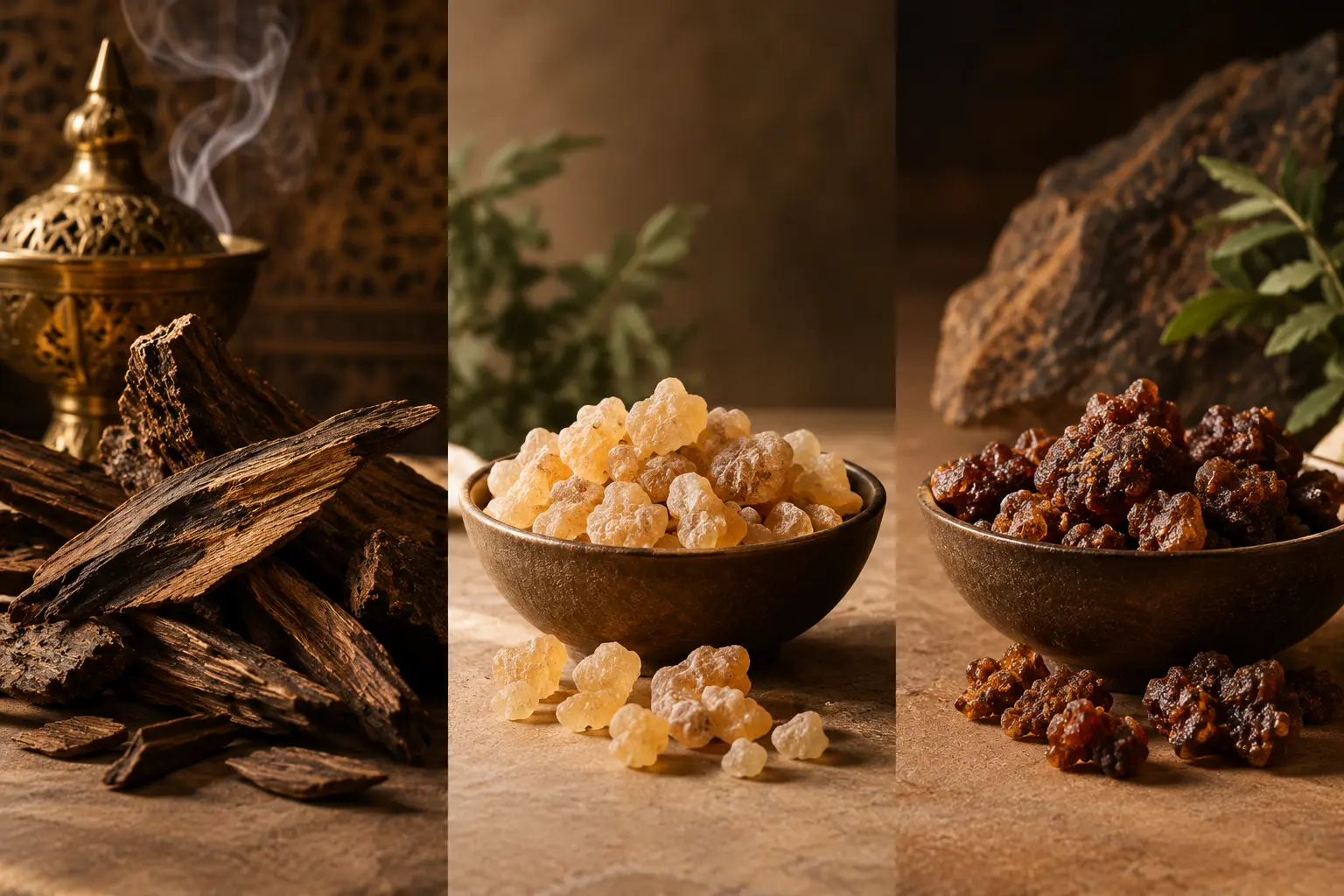
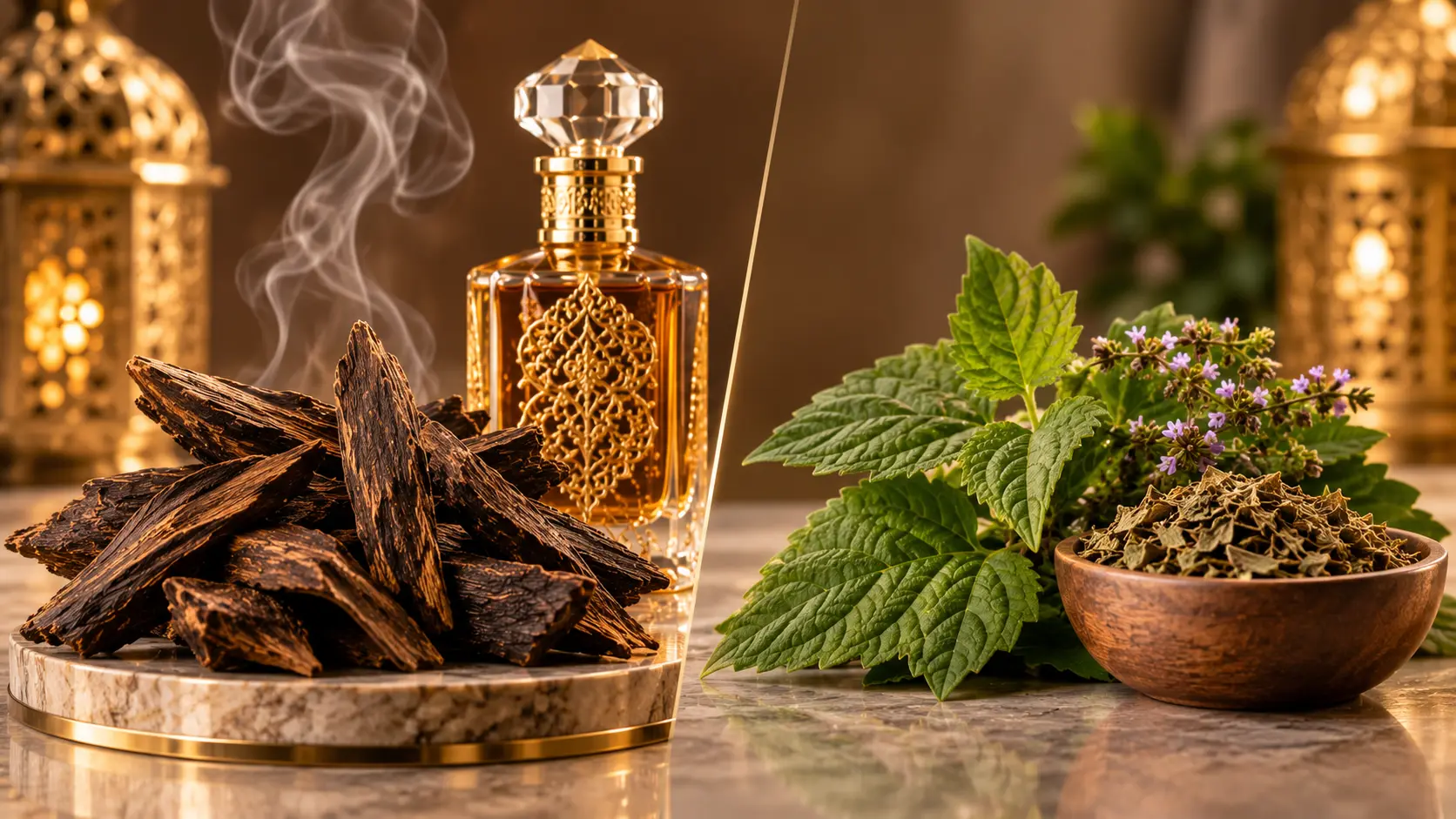
Oud is a dark, fragrant resin that forms inside Aquilaria trees, native to South and Southeast Asia. The scent is deep, woody and complex, and can lean smoky, leathery, sweet or slightly animalic. The word comes from Arabic, and it’s also spelled “oudh” or “aoud”.
Agarwood
Agarwood is the resin-filled heartwood of the Aquilaria tree, and the source of oud. Healthy Aquilaria wood is pale and almost odourless. The fragrant resin forms when the tree responds to injury or infection, slowly darkening the wood over many years.
Wild vs Cultivated Oud
Wild oud comes from trees that formed resin naturally, often over decades. It is rare and very expensive. Cultivated oud comes from plantation trees, where the resin is encouraged to form. Cultivated oud is more sustainable and makes oud far more accessible.
Oud Accord
An oud accord is a blend of materials designed to recreate the scent of oud. Many modern perfumes use an accord, sometimes alongside natural oud, to give a consistent and affordable oud character.
Oils and Blends
Dehn Al Oud
“Dehn” means oil in Arabic, so dehn al oud simply means oud oil. It’s made by distilling agarwood, and it takes a large amount of wood to produce a small quantity of oil. Dehn al oud is highly concentrated and is usually applied in tiny amounts, straight onto the skin.
Attar
Attar, also written “ittar” or “itr”, is a traditional, alcohol-free perfume oil. Classic attars are made by distilling flowers, herbs or woods, often into a base of sandalwood oil. Today, many people use “attar” more loosely to mean any oil-based perfume.
Mukhallat
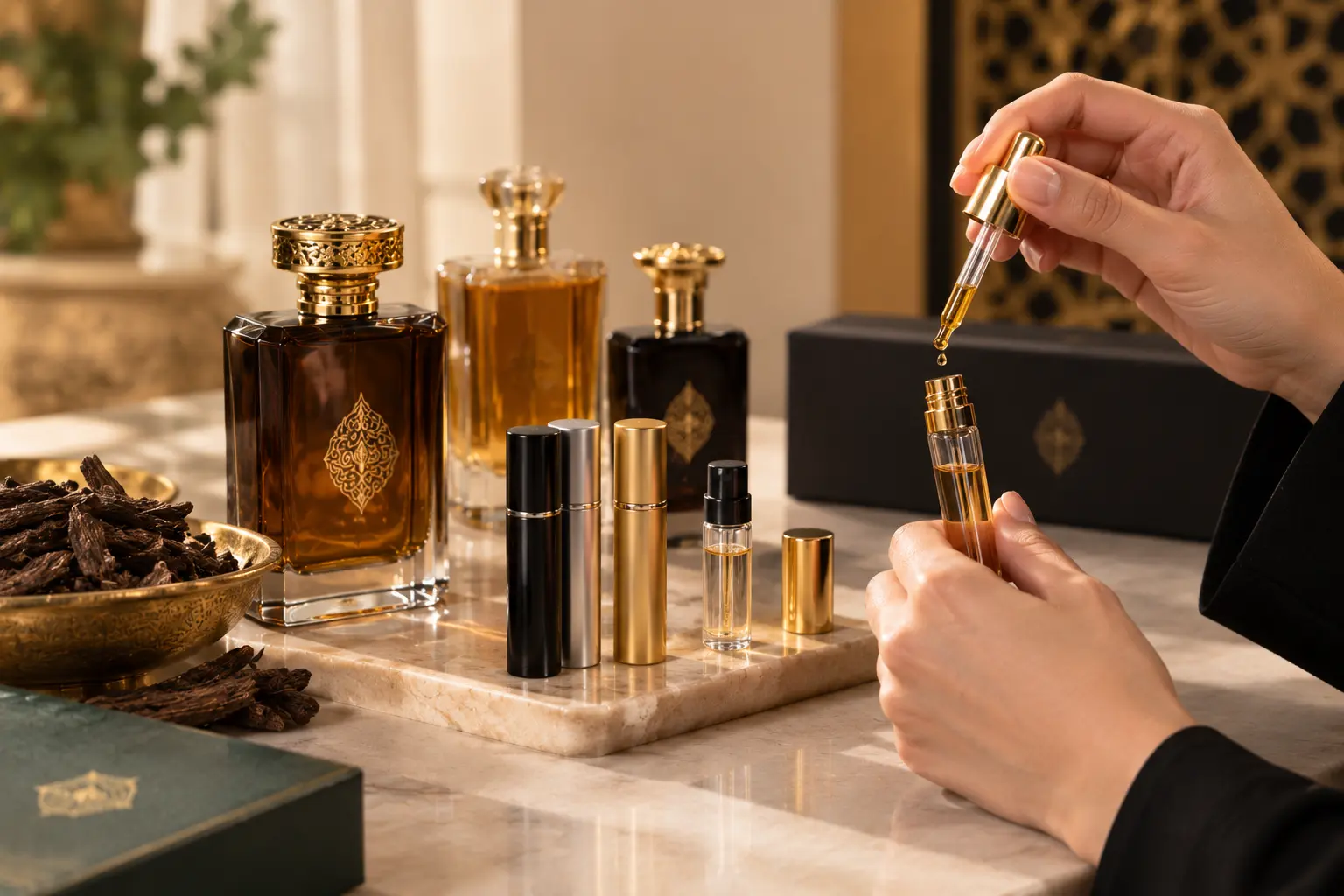
Mukhallat comes from the Arabic word for “mixture”. It describes a blend of perfume oils, often built around oud. Common partners include rose, musk, amber and saffron. Mukhallats are popular because they soften oud and make it easier to wear.
Concentrated Perfume Oil (CPO)
CPO is a modern term for an oil-based perfume with no alcohol. It’s similar to an attar, though it may use a wider mix of natural and synthetic materials.
Burning Traditions
Bakhoor
Bakhoor is a fragrance you burn rather than wear. It’s usually made of wood chips or small pressed bricks soaked in perfume oils, resins and sometimes sugar or honey. Burning it fills a room with scented smoke. It’s often used to welcome guests or to perfume clothes and hair.
Mabkhara
A mabkhara, sometimes called a mubkhar, is the burner used for bakhoor or oud chips. Traditional versions hold a piece of hot charcoal. Electric mabkharas are also popular, as they heat the bakhoor without an open flame.
Oud Chips
Oud chips are small pieces of raw agarwood burned on a mabkhara. Unlike bakhoor, they aren’t soaked in added fragrance, so you smell the natural character of the wood. Higher-quality chips are darker, denser and richer in resin.
Grades, Origins and Measures
Regional Styles
Oud smells different depending on where the trees grow and how the oil is made. You’ll often see oud described by origin, such as Indian (Hindi), Cambodian, Indonesian, Malaysian or Thai. Some styles are known for earthy or animalic tones, while others are sweeter, fruitier or more balsamic.
Kinam (Kyara)
Kinam, also called kyara, is an extremely rare, high-grade form of agarwood. It’s prized for its rich resin and complex scent, and it’s among the most expensive natural materials in perfumery.
Tola
A tola is a traditional measure used for perfume oils in the Middle East and South Asia. One tola is about 11.7 grams, and perfume oils are often sold in 12 ml bottles described as one tola.
Perfume Terms You’ll See With Oud
Eau de Parfum (EDP)
An eau de parfum is an alcohol-based perfume with a relatively high concentration of fragrance oils. It’s sprayed rather than dabbed and usually lasts several hours on the skin. Most modern Western-style oud perfumes are eau de parfums.
Musk (Misk)
Musk adds soft, clean, skin-like warmth. It was once taken from animals, but almost all musk in modern perfumery is now made in the lab. “Misk” is the Arabic word for musk.
Taif Rose
Taif rose comes from the mountains around Taif in Saudi Arabia. It’s famous for its rich, spicy-sweet scent and is one of oud’s most classic partners.
Amber
In modern perfume, amber is a warm, resinous accord, usually built from materials such as labdanum, vanilla and benzoin. It’s different from ambergris, a rare natural material, and from fossilised amber, the gemstone.
Sillage, Projection and Longevity
- Sillage: The scent trail a fragrance leaves as you move.
- Projection: How far the fragrance spreads from your skin.
- Longevity: How long the fragrance lasts before fading.
Dry-Down
The dry-down is the final stage of a fragrance, once the lighter notes have faded. In oud perfumes, it’s often the richest and longest-lasting part of the scent.
Layering
Layering means combining two or more fragrances. You might wear an oud oil under an eau de parfum, or scent your clothes with bakhoor before applying perfume. It’s a long-standing tradition in Middle Eastern fragrance culture.
Oud Terms at a Glance
| Term | What it is | How it’s used |
| Oud | Resin from agarwood | Base note in perfumes and oils |
| Dehn al oud | Pure oud oil | Dabbed on skin in tiny amounts |
| Attar | Traditional alcohol-free perfume oil | Dabbed on pulse points |
| Mukhallat | Blend of perfume oils | Dabbed on skin or clothes |
| Bakhoor | Scented wood chips or bricks | Burned to scent rooms and clothes |
| Mabkhara | Incense burner | Heats bakhoor or oud chips |
| Oud chips | Raw agarwood pieces | Burned for natural oud smoke |
| Tola | Traditional measure (about 11.7 g) | Used to sell perfume oils |
| Eau de parfum | Alcohol-based perfume | Sprayed on skin |
Oils, Bakhoor or Eau de Parfum: Which Should You Choose?
Each format suits a different moment. Oils and mukhallats sit close to the skin and feel personal. Bakhoor is ideal for scenting your home or clothes. An eau de parfum is the easiest way to wear oud every day. A light spray projects well and develops through the day.
Many people combine them. A touch of bakhoor on clothes, followed by an oud eau de parfum, creates a rich, layered scent.
Discover Oud the Modern Way
Emiri Oud brings the heritage of oud into modern eau de parfums. Each blends authentic oud with notes such as saffron, rose, amber and musk. Explore the Sheikh collection of men’s oud perfumes or the Sheikha collection for women.
Want to know more about the brand behind the bottles? Read the Emiri Oud story.
Frequently Asked Questions
What is the difference between oud and agarwood?
Agarwood is the resin-filled heartwood of the Aquilaria tree. Oud is the fragrant resin, and the oil and scent made from it. The two terms are often used interchangeably.
What is dehn al oud?
Dehn al oud means oud oil in Arabic. It’s distilled from agarwood, is highly concentrated, and is usually applied in very small amounts directly onto the skin.
What is the difference between attar and perfume?
An attar is a traditional, alcohol-free perfume oil that is dabbed onto the skin. Most modern perfumes, such as eau de parfums, are alcohol-based and sprayed. Attars tend to sit closer to the skin, while sprays project further.
What does mukhallat mean?
Mukhallat comes from the Arabic word for “mixture”. It’s a blend of perfume oils, often built around oud and combined with notes such as rose, musk, amber or saffron.
How do you use bakhoor?
Place a piece of bakhoor on a heated mabkhara, either over hot charcoal or in an electric burner. Let the scented smoke fill the room, or hold clothes or hair near it to perfume them. Never leave a burning mabkhara unattended.
What is a tola in perfume?
A tola is a traditional measure used for perfume oils, equal to about 11.7 grams. Perfume oils are often sold in 12 ml bottles described as one tola.