Oud has a big reputation, and not all of it is deserved, because it is rare, rich and often misunderstood, and a lot of myths have grown up around it, with some of them putting people off trying it at all. Here are seven of the most common ones, and what is actually true.
Myth 1: Oud is too overpowering to wear every day
Oud can certainly be bold, but it isn’t always, and modern blends often soften it with florals, vanilla or musk so that it feels warm rather than heavy. Plenty of people wear a gentle oud to the office, and the number of sprays you use matters just as much as the scent itself.
Myth 2: Oud is a men’s fragrance
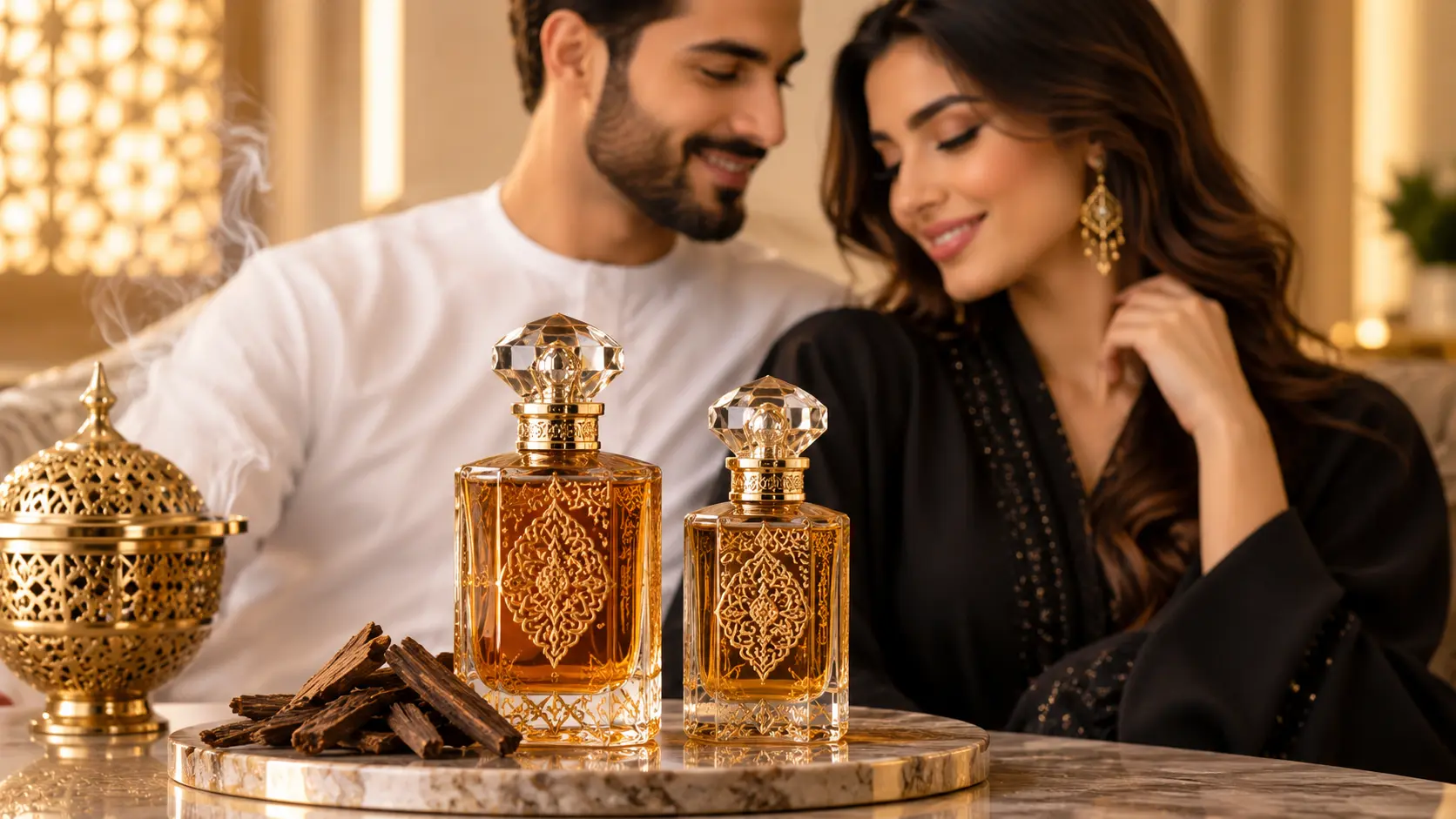
Oud has been worn by both men and women across the Middle East for centuries, and today it appears in delicate floral blends as well as deep, smoky ones. That range means there is an oud to suit almost every taste, whatever label the bottle carries.
Myth 3: All oud smells the same
In reality, the type of agarwood, the region where it grew and the way it was processed all change the final scent. Some ouds are smoky and leathery, while others are sweet, fruity or creamy, which is why two bottles labelled oud can smell completely different.
Myth 4: Oud always smells animalic, like a barnyard
Some oud does have a strong animalic edge, particularly certain styles from India and Laos, but plenty of oud smells woody, sweet or balsamic instead. If one oud has put you off, a different style might well change your mind.
Myth 5: Oud is only for people with a big budget
Pure, rare oud oil is genuinely expensive, and that part is true, but many oud fragrances use carefully built accords that cost far less, so you don’t need to spend a fortune to enjoy the scent.
Myth 6: Oud is only made by Middle Eastern brands
Oud is deeply rooted in Middle Eastern culture, and Arabian perfumery remains its spiritual home. Perfumers around the world now use it too, including European luxury houses and Asian niche brands, so it is no longer the only place you will find it.
Myth 7: Oud is old-fashioned
If anything, the opposite is true, because perfumers keep finding new ways to work with it, from creamy and gourmand styles to light and airy ones, and it remains one of the most talked-about notes in contemporary perfumery.
Try an Oud That Breaks the Myth
Hilwa — Jasmine, amberwood and cedarwood. A sweet, floral and warm woody profile.
Rosmah — The supplied URL currently redirects to Hidden Oasis, which lists narcissus, thistle and cedarwood. Confirm whether this is the intended replacement before using these notes for Rosmah.
Edens Avaris — Bergamot, rose de mai and agarwood (oud). A fresh, floral and woody profile.
Dukhan — Whiskey, cinnamon and oud (agarwood). A smoky, warm and spicy profile.
Sakina — I couldn’t verify its current product page. Please confirm its published notes before assigning a myth.
Zafira — Lavender, agarwood (oud) and musk. A fresh, aromatic and musky woody profile.
FAQs
Is oud perfume too strong for beginners?
It doesn’t have to be, as long as you start with a softer, creamy oud and a light hand and then explore bolder styles as your confidence grows.
Is real oud always better than an oud accord?
Not necessarily. Natural oud is rare and complex, but a well-made accord can be beautiful, consistent and far more affordable.
Why does some oud smell strange at first?
Oud often opens sharp, smoky or slightly medicinal before it softens, so give it time on your skin, because the later stages are where it really shines.
Is there an oud for people who don’t like heavy perfumes?
Yes, because lighter, fresher and creamier oud blends exist, and they are often the best place for newcomers to start.
Final Thoughts
Most oud myths come from a single bad experience or one very strong bottle. Once you know the range on offer, from soft and creamy to deep and smoky, it becomes much easier to find one you love.