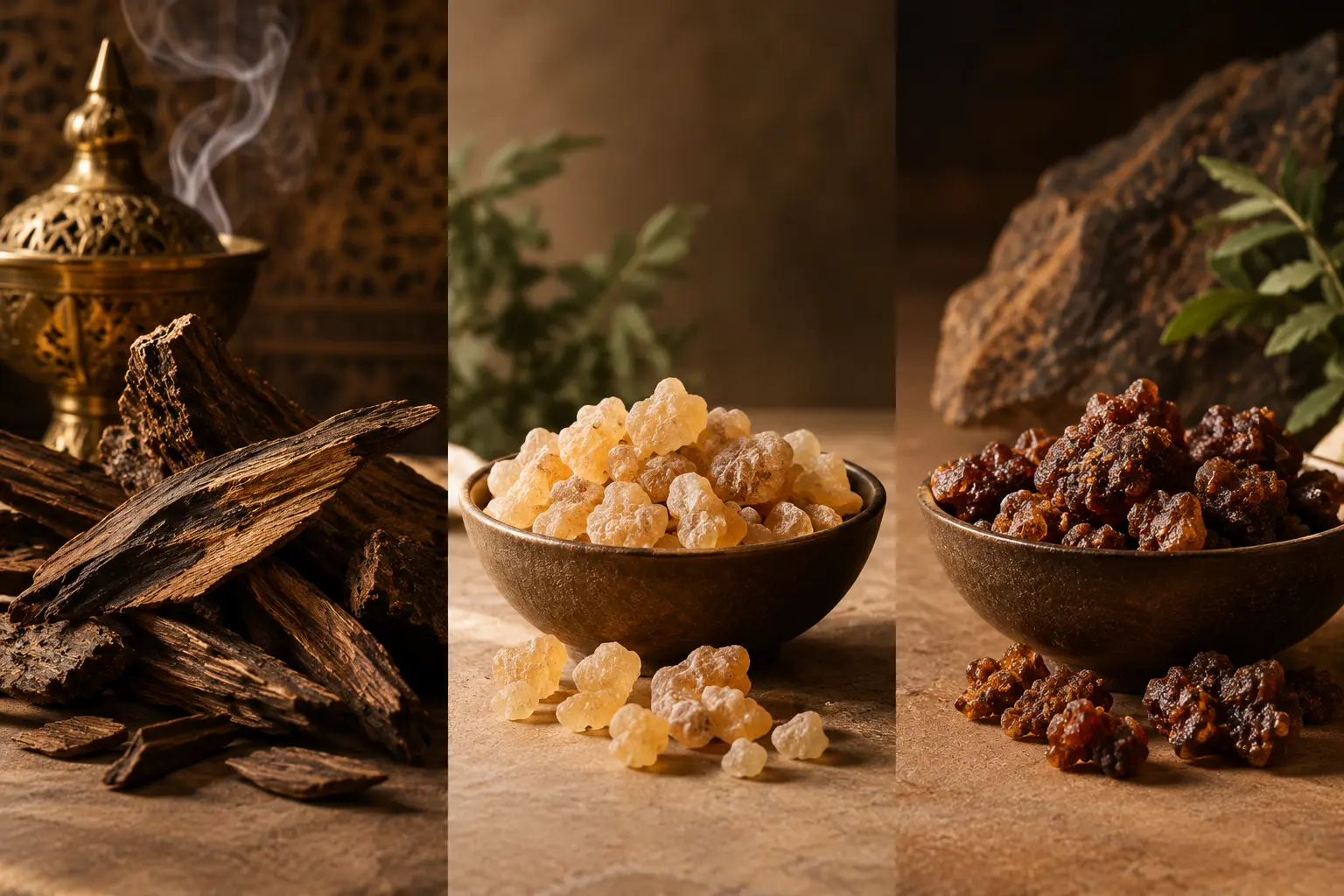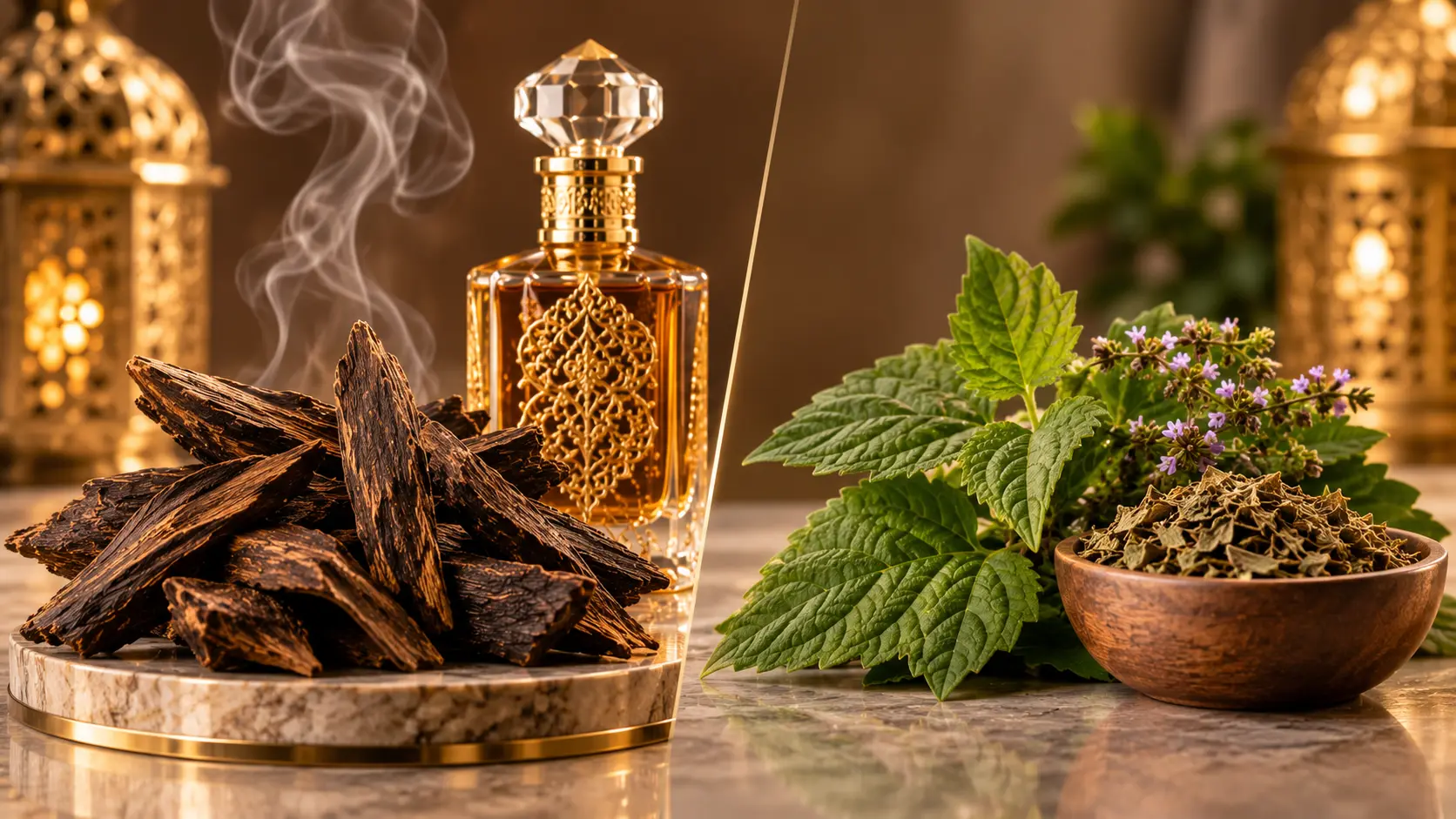
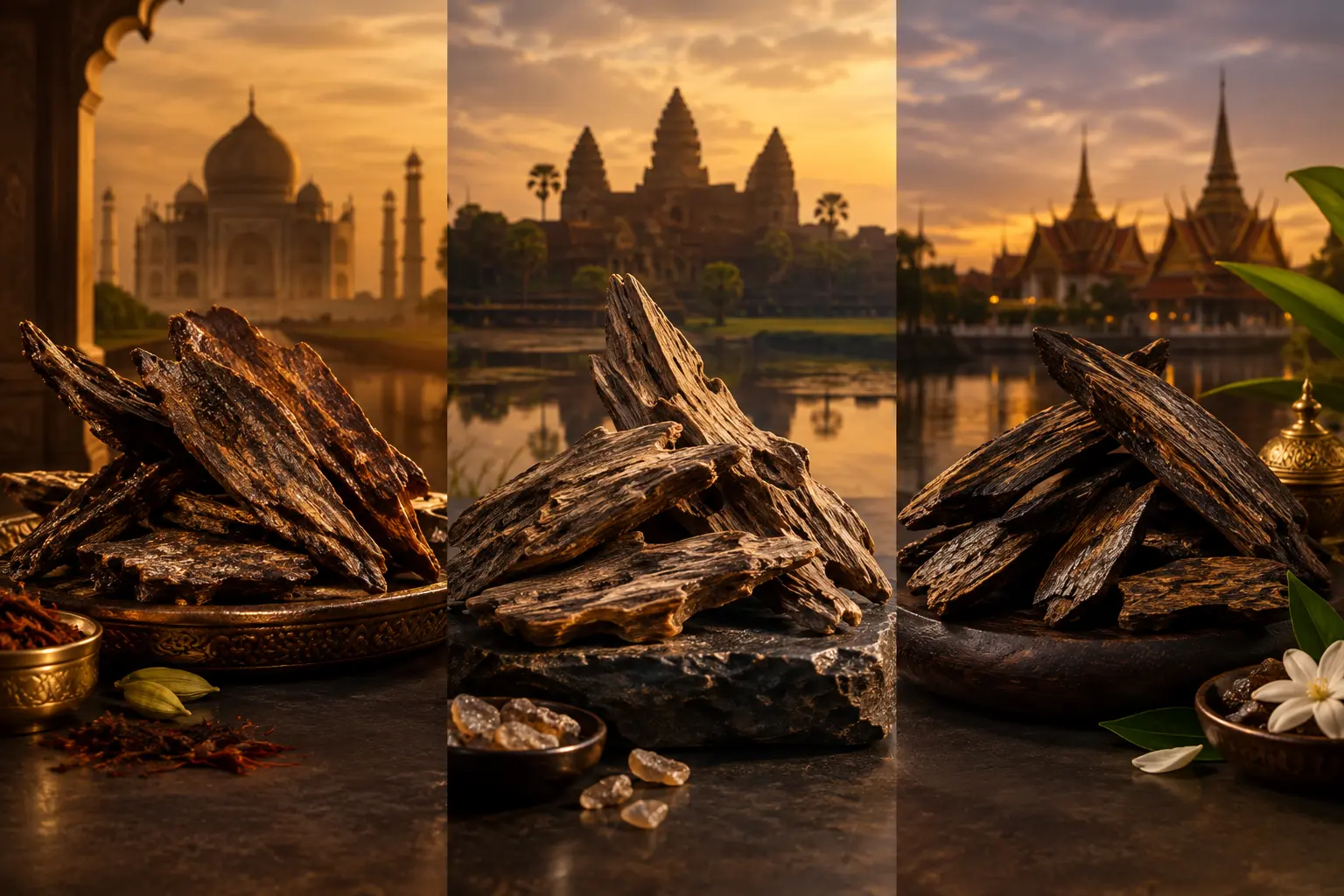
Ask any two oud lovers to describe “the smell of oud” and you’ll likely get two different answers, and they’re both right. Oud isn’t a single, uniform scent. It’s a raw material shaped by where the agarwood tree grew, which species it came from, and how the resin was extracted. Three regions, in particular, define most of what you’ll find in perfumery today: India, Cambodia and Thailand. In this guide, we’ll break down what makes each one distinct, so you can shop with a bit more confidence next time you’re choosing an oud fragrance.
What is oud made of in the UK?
What Actually Determines an Oud’s “Type”?
Before we get into the differences, it’s worth understanding where they come from. Oud forms when agarwood trees (genus Aquilaria) become infected by a particular mould, triggering the tree to produce a dark, fragrant resin as a defence response. The species of tree, the region it grew in, the climate and soil, and how the resin is later distilled all shape the final scent.
Indian oud typically comes from Aquilaria malaccensis, largely grown in Assam. Cambodian and Thai oud both typically come from Aquilaria crassna, which is why the two share more similarities with each other than either does with Indian oud. Keep in mind these are tendencies rather than strict rules; two ouds from the same country can still smell surprisingly different depending on how they were made.
Indian Oud: Bold, Smoky and Animalic
Indian oud, often called Assam oud, has the reputation as the most intense and traditional style. Expect deep, smoky, leathery notes, with the animalic, “barnyard” character that oud purists prize. Tobacco, spice and resinous wood typically run through the base. It’s rich, warm and long-lasting, but it’s also the style most likely to feel overwhelming to a beginner, which is why it’s often recommended once you already know you enjoy oud.
Cambodian Oud: Sweet, Fruity and Balsamic
Cambodian oud tends to be gentler and more approachable. Rather than leaning smoky or animalic, it typically brings honeyed, fruity and balsamic notes, think dried fruit, resin and a soft warmth rather than a sharp intensity. It’s one of the more universally liked oud styles, which is why you’ll find it used often in oud-and-rose or oud-and-floral blends aimed at a wider audience.
Oud and Rose Perfume: The Ultimate Pairing Guide (for Women & Men)
Thai Oud: Fresh, Herbal and Slightly Mineral
Because Thai oud comes from the same species as Cambodian oud, the two share a family resemblance, sweetness, warmth and balsamic depth. But Thai oud typically adds something distinct: a fresher, slightly herbal or mineral edge that’s harder to describe but easy to recognise once you’ve smelled it. It tends to feel a touch lighter and zestier than its Cambodian cousin, making it a good middle ground between bold Indian oud and mellow Cambodian oud.
Indian vs Cambodian vs Thai Oud: Quick Comparison
| Indian Oud | Cambodian Oud | Thai Oud | |
|---|---|---|---|
| Typical species | Aquilaria malaccensis | Aquilaria crassna | Aquilaria crassna |
| Character | Bold, smoky, animalic | Sweet, fruity, balsamic | Fresh, herbal, slightly mineral |
| Intensity | Strongest | Mellow | Moderate |
| Best for | Experienced oud lovers | Beginners, oud-and-floral blends | Those who want warmth with a fresher edge |
| Common notes | Tobacco, leather, resin | Honey, dried fruit, resin | Herbal, zesty, woody |
Oud vs Agarwood: Which Fragrance Is Better?
Which Type of Oud Is Right for You?
If you’re new to oud and want something easier to wear, start with a Cambodian-style blend. If you’ve worn oud before and want more depth and drama, an Indian-style oud will deliver it. And if you like the idea of oud but want something a little fresher and less heavy, Thai-style oud is worth seeking out.
Oud Perfume in the UK: A Complete Guide to Buying the Right Scent
A Note on Natural vs Synthetic Oud
Most oud fragrances sold today, including the majority of mainstream perfumery, use oud accords built from a blend of natural and synthetic materials rather than pure agarwood oil, which is extremely rare and expensive. This isn’t a downside: well-built oud accords can faithfully capture the character of Indian, Cambodian or Thai-style oud, at a far more accessible price point.
[Link internally to “Affordable Oud Perfumes for Ladies That Smell Expensive” and “Is Oud Stronger Than Perfume?” here.]
FAQs
Which type of oud is the strongest?
Indian (Assam) oud is generally considered the most intense and animalic of the three.
Which type of oud is best for beginners?
Cambodian oud, thanks to its softer, sweeter, more balsamic character.
Is Thai oud the same as Cambodian oud?
They come from the same species and share similarities, but Thai oud typically has a fresher, more mineral or herbal edge that sets it apart.
Does the type of oud affect how long it lasts?
Not dramatically; longevity depends more on concentration and formulation than regional origin, though denser, resin-heavy styles like Indian oud can feel like they linger longer.
Final Thoughts
Understanding the difference between Indian, Cambodian and Thai oud won’t just make you a more confident shopper, it’ll help you find a fragrance that actually matches the mood you’re after, rather than relying on guesswork. Once you know which style you’re drawn to, it becomes much easier to navigate the rest of the oud world.
[Close with a CTA to your oud collection/shop page, plus a link to “Best Oud Perfumes in the UK: A Guide to Luxury Fragrances.”]